§ 01
Engineering
12+ years of backend, agentic AI, devtools and business software.
Catalog · 21 projects
Daímon
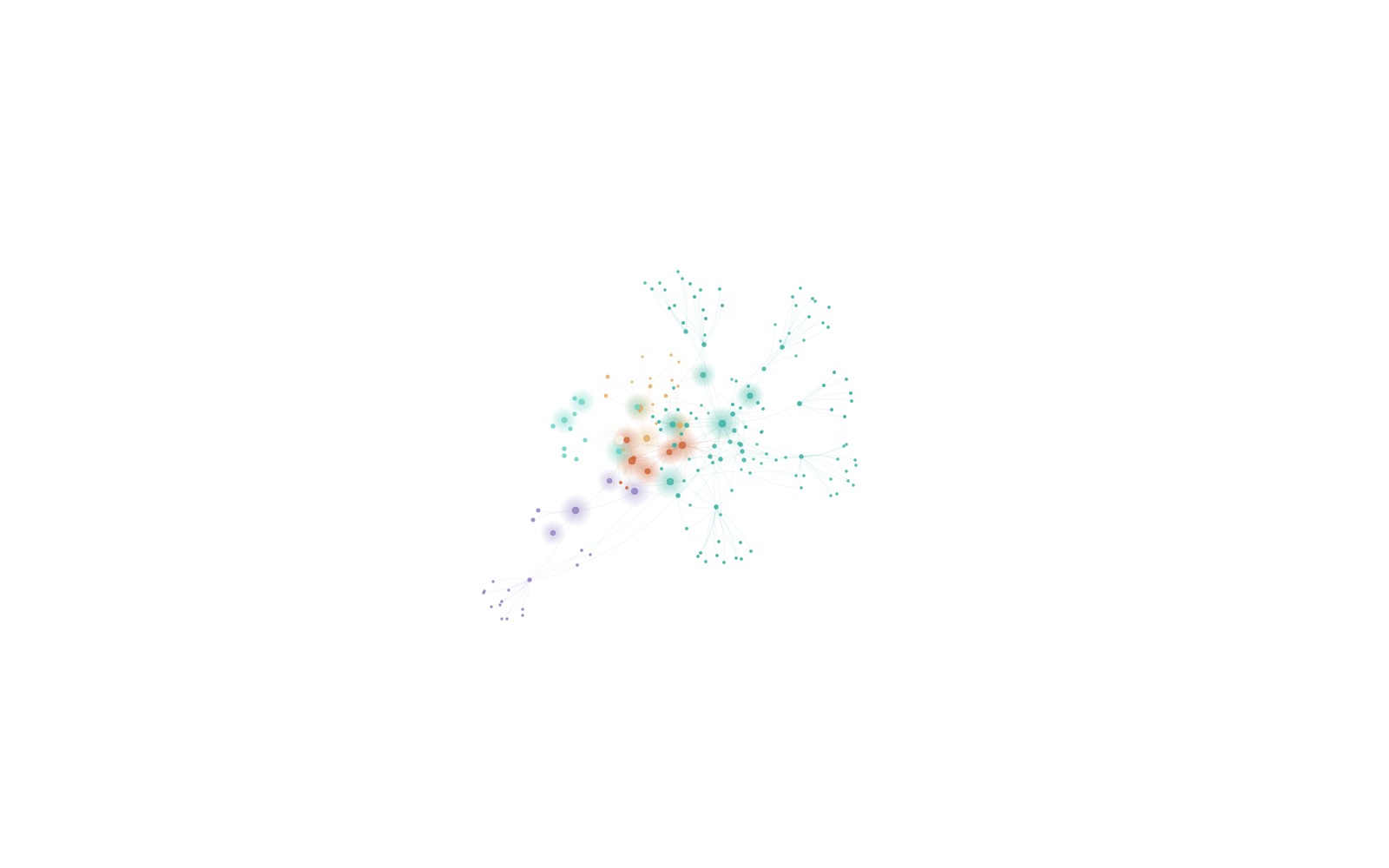
Atlas of intelligence
It gathers my AI projects (assistants, agent infrastructure, local inference and tools), each with its own page, diagram and repository. It does not run them: it documents and links them, and says plainly which are demos, which are references and which are private.
- Agent infrastructure 9
- Assistants & voice 5
- Tools & creation 5
- Inference & experiments 2
12 projects with a site of their own
Orchestrating director of the agent fleet
Cauce V3
Also in Humanizar
Cauce V3
My flagship engineering project: it directs the fleet of AI agents that runs this very portfolio and the whole Humanizar ecosystem. Deployments, monitoring, delivery contracts between agents and a multi-tenant CRM, in production. The right hand that keeps the fleet alive.
Flagship engineering project
An operational method and toolkit for complex problems
SpecOrganon
SpecOrganon
Connects philosophy, science and engineering across nine phases: from the problem and evidence to requirements, construction and validation. Its local MVP brings together a CLI, an MCP server, a versioned case record, review gates and resumption. The site introduces the method and a guide to applying it to your own projects.
Methodology · SDD · MCP
Natural language → formal logic
Órganon
Órganon
The technical jewel, live: write in Spanish → autologic (rule-based NLP formalizer) translates it → ST executes it (a logic language with a home-grown CDCL SAT solver, 6,333 tests). No AI, no database: it all runs in-process, serverless on Vercel.
Technical jewel
Brand image generator
Eikón
Eikón
Deterministic brand-identity generator: procedural isotypes, palettes, icon sets and social kits, with WCAG contrast validation. Multi-tenant webapp + API + MCP server, in production. The engine that builds the brands of this very portfolio.
Brand generator
Custom SMB software
Érgon
Also in Humanizar
Érgon
Commercial landing for a suite of three ready-to-customize SMB starter kits: CRM (React + Vite + Express), Hours Tracker (Next.js 15 + Turso) and VPN Manager (Flask + Docker). Model: "80% is already built, you pay for the 20% custom". Fixed-scope sale or micro-SaaS.
Fixed-scope 40/30/30
Time tracking + invoices
Chrónos
Also in Humanizar
Chrónos
SaaS app for freelance time tracking and Colombia-localized invoices: single or bulk entry, income calculation with configurable rate, PDF export, weekday filters and average-based autofill. Next.js 15 + SQLite.
SaaS · ~29k COP/mo
SMB CRM
Xenía
Also in Humanizar
Xenía
CRM for Colombian SMBs with 19 entities: kanban pipeline, contacts, companies, deals, activities, quotes and invoices. Localized for tax ID, COP, departments and company types. React 19 + Vite + Express + Neon Postgres, deployed on Vercel.
SMB CRM
Inventory
Apothḗke
Also in Humanizar
Apothḗke
Warehouse and inventory management system: stock, orders, movements, roles (admin/manager/worker), notifications and analytics. React 19 + Vite + Neon Postgres on Vercel serverless functions, with seed demo data to start instantly.
Fixed-scope SMB sale
Legal scraping
Nómos
Nómos
Legislative document indexer with full-text search: adapts scraping to Colombia’s House and Senate and the DR Chamber of Deputies via a swappable Source Adapter pattern that never touches the pipeline. FastAPI + Neon Postgres + Mangum on Vercel serverless.
Turnkey or SaaS
Platform for Discord communities
Koinonía
Also in Humanizar
Koinonía
Multi-tenant platform for Discord communities: web portal (events, library, ranking, store and roles), a NestJS 10 API over Neon Postgres and a discord.js bot with XP and voice rewards. A single codebase and database for many communities isolated by tenantId.
Multi-tenant
OSS dev tools
Téchne
Téchne
Docs and showcase of OSS devtools for Linux: Ultimate Terminal (browser-based distributed machine control), Mission Center Web (Electron-free resource monitor), clawbar (voice + Hyprland status bar with Whisper/Kokoro) and Hyprland Multi-Monitor (independent per-monitor workspaces). Astro Starlight, fully static.
8 OSS tools
Scientific editorial CMS
Áporía
Áporía
Full-stack editorial platform (Next.js 16 + Neon/Postgres + Firebase Auth): publishes papers, archives research and runs collective experiments with real-time visualization, with a /studio panel for editorial CRUD behind real auth. The name evokes paradox, but the product is scientific publishing infrastructure.
Coming soon